

-
Call Now +2348051946228
-
Any Questions elizabethperfumery@gmail.com
What Are Top Notes, Middle Notes, and Base Notes in Perfume?
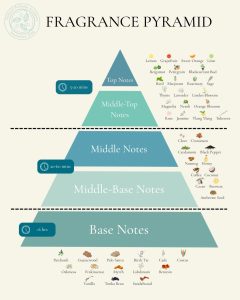
Every well-built perfume follows a structure, even if you’ve never noticed it. That structure is called the fragrance pyramid, and it’s built from three layers: top notes, middle notes, and base notes. Understanding how they work explains why a perfume smells different the moment you spray it compared to how it smells three hours later — and it’s one of the most useful things you can know before buying a bottle.
Here’s exactly what each layer does, how long each one lasts, and why this structure matters more than most shoppers realize.
What the Fragrance Pyramid Actually Means
A perfume isn’t one flat scent — it’s a sequence. Perfumers build fragrances in layers so that different ingredients reveal themselves at different times, creating a scent that evolves rather than staying static from first spray to last trace.
The three layers are:
- Top notes — what you smell in the first few minutes
- Middle notes (also called heart notes) — what emerges as the top notes fade, usually 15–30 minutes in
- Base notes — what remains for the longest stretch, often the notes still present hours later
This layered structure is why a perfume can smell completely different right after application compared to how it smells by the end of the day. Both versions are “correct” — they’re just different chapters of the same composition.
Top Notes: The First Impression
Top notes are the ingredients you smell immediately after spraying a perfume. They’re designed to be attention-grabbing and pleasant right out of the bottle, since they’re what most people judge a fragrance by at the counter.
Characteristics of top notes:
- Light, volatile molecules that evaporate quickly
- Usually last 5 to 15 minutes, sometimes up to 30
- Often bright, fresh, or sharp in character
- Common examples: citrus (bergamot, lemon, orange), light herbs (basil, mint), and some fruit notes
Because top notes fade so fast, they shouldn’t be the only thing you judge a fragrance on. A perfume that smells incredible in the first thirty seconds but has a poorly built middle or base can be disappointing an hour later — which is exactly why testing on skin over time matters more than a quick sniff from the bottle.
Middle Notes: The Heart of the Fragrance
Middle notes, often called heart notes, emerge as the top notes fade and form the main body of the fragrance. This is typically what a perfume smells like for the bulk of the time you’re wearing it, and it’s usually the layer that defines the fragrance’s overall character.
Characteristics of middle notes:
- Emerge around 15 to 30 minutes after application
- Last several hours, forming the core identity of the scent
- Often rounder and more complex than top notes
- Common examples: florals (rose, jasmine, ylang-ylang), spices (cinnamon, cardamom), and fruit notes with more depth than citrus
A well-constructed middle note phase bridges the opening and the base smoothly, so the transition feels natural rather than like the scent suddenly changed into something unrelated.
Base Notes: What Makes a Scent Last
Base notes are the heaviest, slowest-evaporating ingredients in a perfume. They emerge last and are responsible for a fragrance’s overall longevity and depth, often remaining on skin long after the top and middle notes have faded completely.
Characteristics of base notes:
- Emerge roughly 30 minutes to a few hours after application
- Can last many hours, sometimes into the next day
- Rich, deep, and often warm in character
- Common examples: woods (sandalwood, cedar), resins (amber, oud, frankincense), musk, and vanilla
Base notes are also what anchor a perfume’s other layers. They act as a fixative, slowing the evaporation of the top and middle notes and helping the entire composition last longer than any single ingredient would on its own.
How the Three Layers Work Together Over Time
Here’s a rough timeline of how a typical fragrance unfolds:
- 0–15 minutes: Top notes dominate — bright, immediate, attention-grabbing
- 15 minutes–2 hours: Middle notes take over as top notes fade, forming the heart of the scent
- 2+ hours onward: Base notes become most prominent, providing depth and lasting power
These phases overlap rather than switching abruptly. A well-blended perfume transitions smoothly, with each layer handing off to the next rather than creating jarring shifts in character.
Why Molecular Weight Determines Which Layer a Note Belongs To
The structure isn’t arbitrary — it’s chemistry. Lighter, smaller molecules evaporate faster, which is why citrus and light herbs almost always sit in the top note category. Heavier, larger molecules evaporate slowly, which is why woods, resins, and musks almost always form the base.
This is also why perfumers can’t simply swap a note from one layer to another. Vanilla, for example, is a heavy molecule that naturally belongs in the base — it wouldn’t make sense as a fleeting top note because its chemical structure doesn’t evaporate that quickly.
How to Read a Fragrance Description Using This Structure
When a perfume’s notes are listed — commonly on the brand’s website or the box — they’re almost always broken into top, middle (heart), and base categories. Understanding this helps you predict how a fragrance will actually wear rather than just what it’s marketed as smelling like.
- If the top notes are what appeal to you most, be aware they’ll fade within the first half hour
- If the middle notes interest you, that’s a better indicator of what the fragrance will smell like for most of the day
- If the base notes list heavy materials like oud, amber, or musk, expect strong longevity even after the lighter notes disappear
This is particularly useful when comparing two similar-sounding perfumes — the notes list tells you not just what’s in the bottle, but roughly how it will behave over time.
What This Means When You’re Testing Perfume
A common mistake is judging a perfume purely by its top notes, since that’s what you smell first at a counter or from a sample strip. To properly evaluate a fragrance:
- Apply it to skin rather than just smelling from the bottle or a paper strip
- Wait at least 30 minutes to experience the middle notes
- Check back after 2–3 hours to judge the base notes and overall longevity
- Compare how the fragrance smells at each stage against what you actually want to wear
If you’re shopping and can’t test extensively in person, browsing detailed note breakdowns in a well-curated shop — rather than relying on a single impression — gives a much better sense of how a fragrance will actually perform.
Common Notes in Each Layer
Top notes: bergamot, lemon, grapefruit, mandarin, mint, basil, pink pepper
Middle notes: rose, jasmine, lavender, geranium, cinnamon, cardamom, ylang-ylang
Base notes: sandalwood, cedar, amber, oud, musk, vanilla, patchouli, frankincense
Fragrances built heavily around base notes — like most Arabian oud compositions — tend to have longer overall longevity, while fragrances leaning on lighter top and middle notes, common in many fresh or citrus-forward designer perfumes, tend to be shorter-lived but well suited to daytime wear.
Summary
Top, middle, and base notes describe how a perfume unfolds over time — from the bright first impression, through the heart that defines its main character, to the lasting base that determines how long it stays on skin. Knowing this structure changes how you shop for fragrance, since it shifts the question from “what does this smell like right now” to “what will this smell like in three hours.”
Frequently Asked Questions
1. What are top notes in perfume?
Top notes are the first scents you smell after applying perfume. They’re typically light, fresh ingredients like citrus or herbs that fade within 15 to 30 minutes.
2. What are middle notes in perfume?
Middle notes, also called heart notes, form the main body of a fragrance and emerge as the top notes fade, usually lasting several hours. They’re often floral or spice-based.
3. What are base notes in perfume?
Base notes are the heaviest, longest-lasting ingredients in a perfume, such as musk, amber, or wood. They emerge last and determine much of a fragrance’s overall longevity.
4. Why do top notes disappear so quickly?
Top notes are made of light, volatile molecules that evaporate fast, which is why they’re only noticeable for the first several minutes after application.
5. Do base notes smell the same as when the perfume is first sprayed?
No. Base notes are usually not very noticeable at first and become more prominent as the top and middle notes fade, often becoming most apparent after a couple of hours.
6. Why should I test perfume on my skin instead of just smelling the bottle?
Smelling directly from the bottle only shows the concentrated blend, not how the fragrance actually unfolds through its top, middle, and base notes on your skin over time.
7. Which layer determines how long a perfume lasts?
Base notes are the primary factor in longevity, since they’re built from heavier, slower-evaporating ingredients that remain on skin long after the top and middle notes have faded.
Explore Fragrances Built for Every Layer
Ready to find a perfume with notes that suit your style from first spray to last trace? Browse Elizabeth Perfumery’s shop for a wide selection of original fragrances with detailed note profiles, over 200 brands available, and nationwide delivery across Nigeria. Reach out to our team for a personal recommendation matched to the notes you love most.
