

-
Call Now +2348051946228
-
Any Questions elizabethperfumery@gmail.com
How Perfume Concentration Affects Scent Longevity
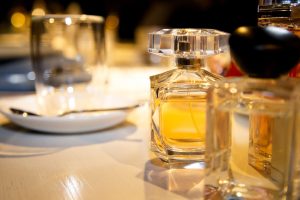
Two bottles of the exact same perfume — one labeled Eau de Toilette, the other Eau de Parfum — can sit on a shelf for completely different lengths of time on your skin. Concentration is the single biggest factor behind that difference, but it’s not the whole story, and understanding how it actually works will change how you shop for fragrance.
Here’s the real relationship between concentration and longevity, including a few things the label on the bottle won’t tell you.
The Basic Relationship Between Concentration and Longevity
Fragrance concentration refers to the percentage of pure fragrance oil dissolved in a mix of alcohol and water. The higher that percentage, the more raw scent material is present on your skin, and the longer it takes for all of it to evaporate.
Eau de parfum, at roughly 15–20% fragrance concentration, typically lasts around 8 hours and can extend up to 24 in some formulations, while eau de toilette, at 5–15% concentration, generally lasts only 2–3 hours. That’s a meaningful gap, and it’s mostly explained by one simple fact: there’s more fragrance material available to release over time in a higher-concentration formula.
The Concentration Tiers, From Lightest to Strongest
The industry generally recognizes five tiers, each defined by its approximate percentage of fragrance oil:
- Eau fraîche / body mist: 1–3%, lasting roughly 1–2 hours
- Eau de cologne (EDC): 2–5%, lasting around 2 hours
- Eau de toilette (EDT): 5–15%, lasting roughly 2–3 hours
- Eau de parfum (EDP): 15–20%, lasting around 6–8 hours, sometimes longer
- Parfum / extrait de parfum: 20–40%, often lasting 8+ hours, sometimes into the next day
As concentration rises, so does the amount of fragrance oil available to slowly release from skin — which is the direct mechanism behind longer wear time.
Why These Labels Are Convention, Not Regulation
Here’s the part most shoppers never learn: these percentage ranges aren’t legally defined anywhere. No regulation actually specifies the exact percentage that qualifies a product as eau de toilette, extrait de parfum, or cologne — these terms function as a commercial vocabulary rather than a legal safety standard, and neither U.S. nor international rules attach a fixed percentage to any of them.
That has a real, practical consequence: the tiers overlap. An Eau de Toilette from one brand can genuinely contain a higher fragrance percentage than an Eau de Parfum from another, and both labels are entirely accurate under current conventions. This is why you can occasionally find an EDT that outlasts an EDP — the label tells you the marketing category the brand chose, not a guaranteed, comparable number across the industry.
How Concentration Interacts With Fragrance Notes
Concentration alone doesn’t determine longevity — what’s actually in the formula matters just as much. Fragrances are built from top, middle, and base notes, and each layer is made of molecules with different weights and evaporation rates. Light citrus and herbal top notes evaporate quickly regardless of concentration, while heavy woods, resins, musk, and amber in the base naturally linger far longer.
This means a heavily concentrated fragrance built mostly around light top notes might not perform as well as a moderately concentrated fragrance with a rich, resinous base. Concentration sets the ceiling for how much material is available, but the notes determine how slowly that material actually leaves the skin.
Concentration vs Sillage and Projection
It’s worth separating three terms that often get blurred together:
- Longevity — how long you personally can still detect the fragrance on your own skin
- Projection — how far the scent reaches from your body
- Sillage — the trail of scent left behind as you move
Higher concentration generally increases all three, but not proportionally. A fragrance can have strong longevity with modest projection, meaning it stays close to the skin for hours without filling a room. If your priority is being noticed from across a space rather than just detecting the scent yourself, projection and sillage — not just the concentration percentage — are what actually matter.
Why Skin and Climate Can Override Concentration
Concentration is a strong predictor of longevity, but it isn’t the only variable, and sometimes it isn’t even the deciding one.
- Skin type: Oily or well-hydrated skin holds fragrance longer than dry skin, since natural oils slow down evaporation
- Body temperature: Warmer skin releases fragrance faster, which can shorten perceived longevity even with a high-concentration formula
- Climate: Heat and humidity accelerate evaporation across the board, meaning even an Eau de Parfum can fade faster in a hot climate than the same fragrance would in a cooler one
- Application method: Applying to pulse points, moisturized skin, or clothing all affect how long a scent actually lasts, independent of concentration
This is why two people wearing the exact same Eau de Parfum can report very different longevity — concentration sets the baseline, but the body wearing it finishes the story.
Choosing Concentration Based on How Long You Want It to Last
A practical way to decide which concentration fits your needs:
- Need it to last through a full workday without reapplying? Choose Eau de Parfum or higher
- Prefer a lighter, more refreshed feeling you can top up during the day? Eau de Toilette works well and gives more control over intensity
- Want maximum longevity for a special occasion? Parfum or extrait de parfum offers the longest wear, often into the next day
- Living in a hot climate? A slightly lower concentration, or an oil-based format, can prevent the fragrance from becoming overwhelming as heat amplifies projection
If you’re unsure which concentration suits your lifestyle, comparing options directly in a shop that carries multiple concentrations of the same fragrance is far more reliable than guessing from percentages alone.
Common Misconceptions About Concentration and Longevity
- “Higher concentration always means better performance.” Not necessarily — a poorly balanced high-concentration formula can underperform a well-built lower-concentration one.
- “Eau de Toilette never lasts as long as Eau de Parfum.” Usually true, but not guaranteed, since concentration ranges overlap between tiers.
- “The percentage on the label is exact and standardized.” It isn’t — brands set their own concentrations within loosely followed industry conventions, with no regulatory body enforcing the numbers.
- “More sprays always extend longevity proportionally.” Overapplication can actually overwhelm the scent’s development rather than extending it meaningfully; correct application technique matters more than quantity.
Summary
Fragrance concentration is the strongest single predictor of how long a perfume lasts, because it determines how much scent material is available on your skin to slowly release over time. But concentration works alongside the specific notes in the formula, your skin type, the climate you’re in, and how you apply it. Understanding this gives you a much clearer way to choose fragrance than relying on the label alone.
Frequently Asked Questions
1. Does higher perfume concentration always mean longer-lasting scent?
Generally yes, since more fragrance oil is available to release over time, but it’s not absolute — the specific notes used and how well the formula is balanced also affect longevity significantly.
2. What percentage of fragrance oil is in Eau de Parfum?
Eau de Parfum typically contains 15–20% fragrance oil concentration, though this can vary by brand since there’s no regulated percentage.
3. Why does Eau de Toilette fade faster than Eau de Parfum?
Eau de Toilette contains a lower percentage of fragrance oil, generally 5–15%, meaning there’s less scent material available to release gradually over the day.
4. Is fragrance concentration legally regulated?
No. The percentage ranges associated with terms like Eau de Toilette or Eau de Parfum are industry convention rather than legal requirements, which is why they can vary between brands.
5. Can an Eau de Toilette last longer than an Eau de Parfum?
Yes, this can happen because concentration ranges overlap between tiers, and the specific ingredients used also affect how long a fragrance lasts, independent of its labeled category.
6. Does skin type affect how long perfume lasts regardless of concentration?
Yes. Oily or well-moisturized skin generally holds fragrance longer than dry skin, which can meaningfully affect longevity even with the same concentration.
7. What’s the longest-lasting perfume concentration?
Parfum or extrait de parfum, typically 20–40% fragrance oil, generally offers the longest wear time, often lasting 8 or more hours.
Find the Right Concentration for You
Ready to choose a concentration that actually fits how you want your fragrance to last? Browse Elizabeth Perfumery’s shop for original perfumes across every concentration level, with over 200 brands available and nationwide delivery across Nigeria. Reach out to our team for a personal recommendation based on your daily routine and how long you need your scent to last.
