-
Call Now +2348051946228
-
Any Questions elizabethperfumery@gmail.com
Arabian Oud vs Designer Perfumes: Which Is Better?
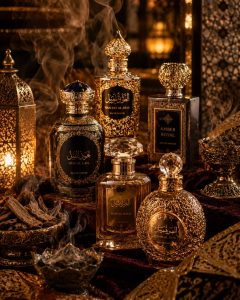
This comparison comes up constantly, and the honest answer is: it depends what you’re optimizing for. Arabian oud and designer perfumes aren’t competing on the same terms — they’re built from different philosophies, different ingredients, and often for different moments in your day. Picking a “winner” without context misses the point.
Here’s a real, practical comparison of Arabian oud versus designer perfumes, so you can decide which one actually suits you rather than which one wins an abstract argument.
The Core Difference: Tradition vs Branding
Arabian oud perfumery is built around a small set of prized natural and synthetic materials — oud (agarwood), amber, musk, saffron — arranged to create depth and intensity. It’s a craft tradition rooted in the Gulf region, refined over centuries, and largely judged on ingredient quality and how the scent develops on skin over time.
Designer perfumes, by contrast, are built around brand identity as much as composition. A designer house develops a signature “juice” meant to be instantly recognizable and consistent across markets, often built from a wider, more varied palette of synthetic and natural materials, with marketing and packaging playing as large a role as the formula itself.
Neither approach is inherently superior — they’re solving different problems. Oud perfumery prioritizes depth and cultural continuity; designer perfumery prioritizes identity and mass appeal.
Ingredients: What You’re Actually Paying For
Arabian oud perfumes typically center on:
- Natural or synthetic oud (agarwood)
- Amber and resins
- Musk
- Saffron and spice notes
- Bakhoor-inspired smoky accords
Designer perfumes typically draw from a broader range:
- Citrus and fruit top notes
- Floral hearts (rose, jasmine, iris)
- Woody or musky base notes
- A significant proportion of synthetic aroma compounds designed for consistency and cost control
Genuine natural oud is one of the more heavily regulated fragrance materials in the world. Wild Aquilaria trees — the source of natural agarwood — have been protected under international wildlife trade rules since the mid-1990s because of overharvesting, and demand for agarwood continues to outpace what can be sustainably supplied. That scarcity is a big part of why authentic natural oud commands such a high price, and why so much commercial “oud” fragrance today uses synthetic or semi-synthetic oud accords rather than pure agarwood extract.
Designer perfumes rarely use raw materials at that price point, which is one reason their overall cost structure — and shelf price — tends to be more predictable.
Longevity and Projection Compared
This is where Arabian oud fragrances often have a clear edge.
- Arabian oud perfumes are typically formulated at higher concentrations and built around heavy, resinous base notes that naturally cling to skin. It’s common for a quality oud fragrance to still be noticeable 8–10 hours after application, sometimes into the next day for attars.
- Designer perfumes vary enormously by formula, but many are built around lighter top and heart notes designed for a pleasant several-hour wear rather than all-day intensity. A typical designer Eau de Parfum might last 6–8 hours, with an Eau de Toilette version lasting less.
If longevity and strong projection are your priority, Arabian oud fragrances generally outperform the average designer release — though there are certainly designer perfumes formulated specifically for maximum longevity, so this isn’t an absolute rule.
Complexity and How the Scent Evolves
A well-made Arabian oud fragrance tends to shift dramatically over the course of wear — the initial smoky, woody intensity softening into warmer amber and musk as hours pass. This evolution is part of the appeal for people who enjoy a scent that tells a story on skin rather than staying static.
Designer perfumes are often engineered for a more linear, immediately pleasant experience — recognizable within seconds and consistent throughout the wear. That consistency is a deliberate design choice, not a shortcoming; it’s what makes a signature scent identifiable and dependable.
Neither approach to complexity is objectively better. It comes down to whether you want a fragrance that transforms through the day or one that stays reliably itself.
Price: Why Oud Often Costs More
Natural oud is genuinely expensive to produce. High-quality agarwood can command prices comparable to precious metals by weight, driven by scarcity, harvesting difficulty, and international trade regulation. Even oud fragrances built on synthetic oud accords tend to sit in a mid-to-premium price range because of the concentration and quality of surrounding materials like amber and musk.
Designer perfumes have more predictable pricing, largely set by brand positioning rather than raw material cost. A mass-market designer EDT might be more affordable than a niche oud attar, while a luxury designer house’s flagship perfume can cost just as much as a quality oud blend — so price alone isn’t a reliable way to compare the two categories.
Which One Suits Which Occasion
- Business or office settings: Designer perfumes, particularly lighter EDTs, are usually the safer, less overwhelming choice
- Evenings, celebrations, or formal events: Arabian oud fragrances shine here, offering the intensity and presence suited to bigger occasions
- Everyday casual wear: Either works, though a lighter designer scent or a diluted oud blend avoids being overpowering in close quarters
- Religious or culturally significant occasions: Traditional attars and bakhoor-inspired oud fragrances carry meaning that a designer perfume simply doesn’t
- Gifting: Designer perfumes are often a safer default for someone unfamiliar with oud’s intensity, while oud makes a memorable gift for someone who already appreciates deeper fragrances
Skin Chemistry: Why Neither Wins Universally
Fragrance interacts differently with every person’s skin. Oils, hydration levels, and body temperature all affect how a scent develops and how long it lasts — which means a fragrance that performs beautifully on one person can smell noticeably different on another.
This applies equally to oud and designer perfumes. The most reliable way to judge either category is to test on your own skin rather than relying entirely on reviews, since skin chemistry can shift how a scent projects, how long it lasts, and even which notes stand out most.
Can You Combine Both? Layering Oud With Designer Scents
Yes, and it’s a popular technique among fragrance enthusiasts. A small amount of oud attar applied to pulse points before spraying a designer perfume can add depth and extend longevity without overwhelming the original scent. This works particularly well when the designer fragrance already has woody or amber undertones that the oud can complement rather than clash with.
If you’re new to layering, start with a very small amount of oud as a base and apply your designer perfume on top — it’s easier to add intensity than to tone it down.
Which Should You Buy First?
If you’re building a fragrance collection and can only choose one to start:
- Choose Arabian oud if you want depth, long-lasting wear, and a distinctive scent that stands apart from mainstream fragrances
- Choose a designer perfume if you want something versatile, easy to wear daily, and immediately recognizable in professional or social settings
Many people end up owning both, using designer fragrances for daily and professional wear, and reaching for Arabian oud on occasions where a stronger, more memorable presence is welcome. If you want to explore both categories side by side, browsing a shop that stocks both original designer perfumes and authentic Arabian oud fragrances makes it much easier to compare in person before committing.
Summary
There’s no universal winner between Arabian oud and designer perfumes — they’re built for different priorities. Oud offers depth, longevity, and cultural weight, while designer perfumes offer versatility, consistency, and broad wearability. The better question isn’t which is objectively superior, but which fits the occasion, your skin, and the impression you want to leave.
Frequently Asked Questions
1. Does Arabian oud last longer than designer perfume?
Generally, yes. Oud fragrances are typically formulated at higher concentrations with heavy base notes, often lasting 8–10 hours or more, while many designer perfumes last 6–8 hours depending on their concentration and formula.
2. Is Arabian oud more expensive than designer perfume?
Often, but not always. Natural oud is a genuinely expensive raw material, but pricing for both categories varies widely based on brand positioning and ingredient quality, so it’s not a fixed rule.
3. Can I wear Arabian oud to the office?
It’s possible with a light application, but oud’s strong projection can be overwhelming in enclosed spaces. A lighter designer fragrance is often the safer choice for office settings.
4. What’s the difference between natural and synthetic oud?
Natural oud comes from resin-infused Aquilaria wood and is scarce and heavily regulated, while synthetic oud is a lab-created accord designed to mimic its scent profile at a more accessible price and with more consistent supply.
5. Can Arabian oud and designer perfumes be worn together?
Yes, layering a small amount of oud under a designer perfume is a common technique to add depth and extend longevity, particularly with designer scents that already have woody or amber notes.
6. Which is a better gift, Arabian oud or a designer perfume?
Designer perfumes are generally a safer choice for someone unfamiliar with fragrance, while Arabian oud makes a distinctive gift for someone who already appreciates deeper, more intense scents.
7. Is Arabian oud considered a luxury fragrance category?
Yes, particularly fragrances built on natural agarwood, which is scarce and internationally regulated due to overharvesting, making genuine oud one of the more premium categories in perfumery.
Explore Both, Decide for Yourself
The best way to settle the oud-versus-designer debate is to try both. Browse Elizabeth Perfumery’s shop for a curated selection of authentic Arabian oud fragrances and original designer perfumes, with over 200 brands available and nationwide delivery across Nigeria. Contact our team for a personal recommendation based on how and where you plan to wear it.
